
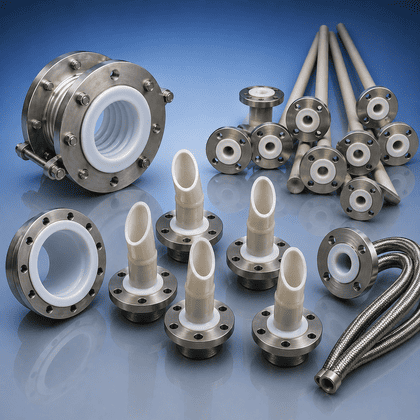
 PTFE (Teflon)
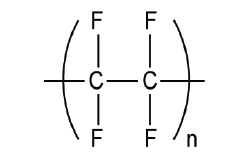
Polytetrafluoroethylene is a highly crystalline, robust and unique plastic with a high melting point. The material has a propensity to exhibit considerable elastic deformation under load. PTFE is
quite flexible even at low temperatures and can be applied to surfaces without losing its integrity. It boasts exceptional chemical resistance; good resistance to both high and low temperatures and
pressures; good electrical insulating power in hot and wet environments; good resistance to light, UV and weathering; low coefficient of friction (static 0.08 and dynamic 0.01); non-stick properties over
a wide temperature range -29°C (-20°F) to 232°C (450°F).
Walfors Industrial’s extrusion technology ensures maximum mechanical properties and especially minimum permeability in pipe liners. PTFE does not have a liquid phase and therefore cannot be readily applied to lining of complex geometrical shapes.
PTFE (Teflon)
Polytetrafluoroethylene is a highly crystalline, robust and unique plastic with a high melting point. The material has a propensity to exhibit considerable elastic deformation under load. PTFE is
quite flexible even at low temperatures and can be applied to surfaces without losing its integrity. It boasts exceptional chemical resistance; good resistance to both high and low temperatures and
pressures; good electrical insulating power in hot and wet environments; good resistance to light, UV and weathering; low coefficient of friction (static 0.08 and dynamic 0.01); non-stick properties over
a wide temperature range -29°C (-20°F) to 232°C (450°F).
Walfors Industrial’s extrusion technology ensures maximum mechanical properties and especially minimum permeability in pipe liners. PTFE does not have a liquid phase and therefore cannot be readily applied to lining of complex geometrical shapes. 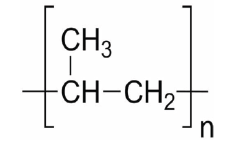 PP – Polypropylene
Polypropylene (PP), also known as polypropene, is a thermoplastic polymer used in a wide variety of applications. Polypropylene is normally tough and flexible, especially when copolymerized with ethylene. This allows polypropylene to be used as an engineering plastic, competing with materials such as acrylonitrile butadiene styrene (ABS). impact strength. Polypropylene at room temperature is resistant to fats and almost all organic solvents, apart from strong oxidants. Therefore, careful consideration should be given to Polypropylene applications, as it is generally not suitable for oxidising agents, hot aromatic hydrocarbons, chlorinated hydrocarbons and benzene.
Suitable for service temperatures not exceeding -10°C(14°F) to 107°C (225°F), however PP will withstand sterilisation at 120°C (248°F) for short periods.
PP – Polypropylene
Polypropylene (PP), also known as polypropene, is a thermoplastic polymer used in a wide variety of applications. Polypropylene is normally tough and flexible, especially when copolymerized with ethylene. This allows polypropylene to be used as an engineering plastic, competing with materials such as acrylonitrile butadiene styrene (ABS). impact strength. Polypropylene at room temperature is resistant to fats and almost all organic solvents, apart from strong oxidants. Therefore, careful consideration should be given to Polypropylene applications, as it is generally not suitable for oxidising agents, hot aromatic hydrocarbons, chlorinated hydrocarbons and benzene.
Suitable for service temperatures not exceeding -10°C(14°F) to 107°C (225°F), however PP will withstand sterilisation at 120°C (248°F) for short periods. 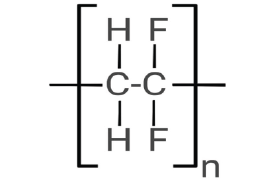 PVDF- Polyvinylidene
Polyvinylidene Fluoride is a true semi-crystalline thermoplastic fluoropolymer and is readily melt-processible, in so permitting rotational transfer or injection moulding of complex geometric shapes. Thanks to its excellent combination of properties and processability, PVDF has become the largest volume of fluoropolymers after PTFE . PVDF is the four-letter acronym for Polyvinylidene Fluoride, one of the world’s toughest, most used high purity, synthetic materials. Polyvinylidene fluoride (PVDF) has been used for corrosive and chemical fluid containment since 1964. In the 1980s copolymer PVDFs were introduced to provide more material flexibility in use.
PVDF is a specialty plastic used in applications requiring the highest purity, as well as resistance to solvents, acids and hydrocarbons. It has a low density 1.78 g/cm3 in comparison to other fluoropolymers, like polytetrafluoroethylene. It exhibits excellent abrasion and permeation resistance and can handle temperatures of -18°C(0°F) to 135°C (275°F). Additionally, PVDF exhibits an increased chemical resistance and compatibility among most thermoplastic materials.
PVDF- Polyvinylidene
Polyvinylidene Fluoride is a true semi-crystalline thermoplastic fluoropolymer and is readily melt-processible, in so permitting rotational transfer or injection moulding of complex geometric shapes. Thanks to its excellent combination of properties and processability, PVDF has become the largest volume of fluoropolymers after PTFE . PVDF is the four-letter acronym for Polyvinylidene Fluoride, one of the world’s toughest, most used high purity, synthetic materials. Polyvinylidene fluoride (PVDF) has been used for corrosive and chemical fluid containment since 1964. In the 1980s copolymer PVDFs were introduced to provide more material flexibility in use.
PVDF is a specialty plastic used in applications requiring the highest purity, as well as resistance to solvents, acids and hydrocarbons. It has a low density 1.78 g/cm3 in comparison to other fluoropolymers, like polytetrafluoroethylene. It exhibits excellent abrasion and permeation resistance and can handle temperatures of -18°C(0°F) to 135°C (275°F). Additionally, PVDF exhibits an increased chemical resistance and compatibility among most thermoplastic materials. 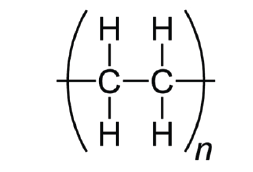 HDPE – High Density Polyethylene
High Density Polyethylene is a thermoplastic polymer known for its high strength-to-density ratio and is especially suitable as corrosion resistant piping. It provides good abrasion resistance combined with mechanical and chemical properties.
This tough, general purpose material is resistant to many different solvents, and is particularly suitable in applications of caustic soda, ammonia and salts, which makes HDPE well accepted in the mining industry.
This alternative liner offers lower price solutions where high abrasion and low chemical resistance and temperatures are required.
HDPE is recommended for service temperatures ranging from -50°C(-58°F) to 80°C (176°F).
HDPE – High Density Polyethylene
High Density Polyethylene is a thermoplastic polymer known for its high strength-to-density ratio and is especially suitable as corrosion resistant piping. It provides good abrasion resistance combined with mechanical and chemical properties.
This tough, general purpose material is resistant to many different solvents, and is particularly suitable in applications of caustic soda, ammonia and salts, which makes HDPE well accepted in the mining industry.
This alternative liner offers lower price solutions where high abrasion and low chemical resistance and temperatures are required.
HDPE is recommended for service temperatures ranging from -50°C(-58°F) to 80°C (176°F). 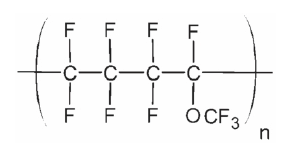 PFA – Perfluoroalkoxy Copolymer
Perfluoroalkoxy Copolymer chemical resistance is on the higher end but is highly reactive to molten forms of alkali metals and fluorine atoms. Due to its remarkable chemical inertness, PFA is frequently used for plastic lab equipment, and its flexibility has made it a common option for tubing in many chemical industries.
PFA is commonly used as a material for piping and as fittings for aggressive chemicals, as well as the corrosion-resistant lining of vessels in the chemical-processing industry. Typical applications include the construction of gas scrubbers, reactors, containment vessels and piping and in coalfired power plants, it is used for lining heat exchangers.
PFA is suitable in service from -18°C (0°F) to 232°C (450°F)
PFA – Perfluoroalkoxy Copolymer
Perfluoroalkoxy Copolymer chemical resistance is on the higher end but is highly reactive to molten forms of alkali metals and fluorine atoms. Due to its remarkable chemical inertness, PFA is frequently used for plastic lab equipment, and its flexibility has made it a common option for tubing in many chemical industries.
PFA is commonly used as a material for piping and as fittings for aggressive chemicals, as well as the corrosion-resistant lining of vessels in the chemical-processing industry. Typical applications include the construction of gas scrubbers, reactors, containment vessels and piping and in coalfired power plants, it is used for lining heat exchangers.
PFA is suitable in service from -18°C (0°F) to 232°C (450°F)